Renovation Trends in Older Properties and Hidden Asbestos Concerns
Renovating older properties is becoming popular due to character homes, heritage value, and affordable investment opportunities. However, these buildings often contain hidden asbestos in walls, ceilings, flooring, and insulation from older construction methods.
As renovation activity increases, especially in urban redevelopment and property flipping, asbestos risks are often overlooked. Without proper inspection, upgrades and structural changes can disturb hazardous materials, leading to health risks, delays, and costly compliance issues.
Growing Popularity of Renovating Older Properties
The demand for older properties has increased due to affordability, location advantages, and unique architectural features. Many buyers are turning to renovation projects instead of purchasing newly built homes. However, this trend also introduces hidden risks that are often ignored in the excitement of redevelopment.
- Older home often contain hidden asbestos in insulation, ceilings, flooring, and structural materials
- Renovation demand is rising due to lower property acquisition costs and strong investment potential overall
- Buyers often prioritize visual design improvements over essential structural safety checks and inspections
- Disturbing old building materials significantly increases the risk of airborne asbestos exposure during work
- Many properties lack updated environmental inspection records, creating uncertainty during renovation planning stages
- DIY renovation trends increase unregulated exposure risks due to lack of safety knowledge and proper tools
- Construction waste may contain hazardous asbestos materials that require careful handling and safe disposal
Why Asbestos Becomes a Hidden Problem in Renovations
Renovation projects often expose materials that were previously sealed or undisturbed. This is where asbestos becomes a serious concern, especially in properties built before modern safety regulations were introduced. Without proper inspection, homeowners may unknowingly release harmful fibers into the air during construction work.
1. Ceiling and Wall Materials
Older ceilings and wall panels frequently contain asbestos based compounds. These materials were used for fire resistance and durability but were not designed with modern health standards in mind.
During renovation, cutting or drilling into these surfaces can release asbestos fibers. This creates invisible air contamination that can spread quickly throughout the property.
2. Flooring Adhesives and Tiles
Vinyl flooring and adhesives used in older buildings often contain asbestos. These materials are usually hidden beneath modern flooring installations.
When removed or replaced during renovation, they can release dangerous particles. Proper identification before removal is essential for safe handling.
3. Insulation and Pipe Lagging
Thermal insulation and pipe lagging in older properties are common asbestos sources. These were widely used for heat resistance in residential and commercial buildings.
Disturbing these materials during plumbing or structural upgrades can create high exposure risks. Professional assessment is critical before any work begins.
4. Roofing and Exterior Materials
Some older roofing sheets and exterior cladding materials contain asbestos cement that was widely used for durability and fire resistance in past construction practices. These materials often remain stable unless disturbed.
Renovation or repair work on roofs can unknowingly release asbestos fibers into the air, especially when cutting or drilling occurs. Weathering over time can also make these materials more fragile and hazardous.
5. Hidden Contamination During Demolition
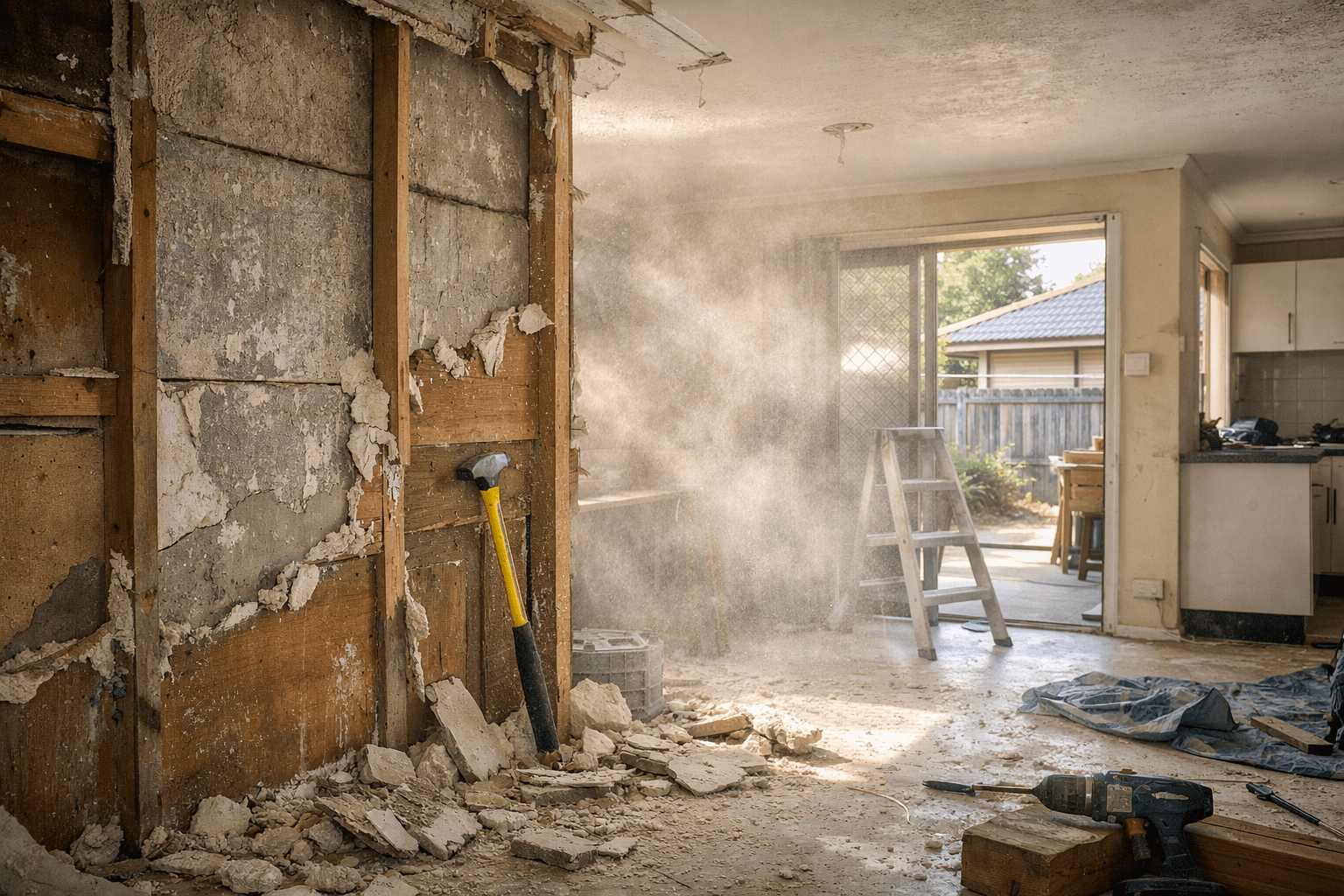
Partial demolition work often exposes previously hidden asbestos layers that were sealed within walls, ceilings, or flooring materials, making this one of the most dangerous renovation stages overall.
Without proper inspection, workers may unknowingly spread asbestos contamination across multiple areas of the property during demolition activities. Controlled assessment helps prevent widespread exposure and ensures safer handling.
6. Increased Risk in DIY Renovations
Homeowners attempting DIY renovations are at higher risk due to lack of training, safety knowledge, and experience in identifying hazardous materials commonly found in older properties, including asbestos.
They may not recognize asbestos containing materials hidden in walls, flooring, insulation, or ceilings. Improper handling can release harmful fibers, increasing exposure risks and contaminating entire living spaces.
Financial and Safety Impact of Ignoring Asbestos Risks
Ignoring asbestos smell and its growth during renovation can lead to serious financial consequences and health hazards. Delays, legal issues, and unexpected remediation costs often arise when asbestos is discovered mid project.
Project Delays and Work Stoppage
Unexpected asbestos findings can immediately halt renovation work as safety protocols require all activity to stop until a full inspection and risk assessment is completed by experts.
This leads to extended project timelines and higher labor costs as workers remain inactive. It also makes planning more complex, requiring rescheduling, compliance checks, and revised workflows.
Increased Renovation Costs
Emergency asbestos removal is significantly more expensive than planned inspections because it requires urgent response, specialized equipment, and strict safety containment procedures.
Budget overruns are common when asbestos is discovered late during renovation projects, causing unexpected expenses. Early detection helps control financial risks and keeps project costs manageable.
Legal and Compliance Risks
Failing to identify asbestos before renovation may violate safety regulations that require proper inspection and risk assessment. Authorities can impose fines or immediately stop construction work.
Non compliance can also damage both contractor and property owner credibility, leading to trust issues. Proper documentation and certified inspection records are essential for legal protection and safety compliance.
Health Risks for Occupants and Workers
Exposure to airborne asbestos fibers can cause serious long term respiratory diseases such as lung cancer and asbestosis, especially when materials are disturbed during renovation work activities.
Risks increase significantly during renovation activities because cutting, drilling, or demolition can release invisible fibers into the air. Proper control measures are essential for safety protection.
Protecting workers and occupants requires strict safety procedures, including testing and controlled handling of materials. Early asbestos inspection remains the most effective preventive step for reducing exposure.
Key Safety Measures Before Renovation
Before starting any renovation project in older properties, safety planning is essential. A structured approach helps reduce risks, ensures compliance with regulations, and protects both workers and occupants from hidden hazards like asbestos.
- Conduct a full property inspection before renovation begins to identify hidden risks early and plan safely
- Identify all potential asbestos containing materials early to prevent accidental disturbance during work phases
- Hire certified professionals for testing and assessment to ensure accurate results and regulatory compliance
- Avoid disturbing unknown materials during demolition work to reduce the risk of airborne fiber exposure
- Follow proper disposal and containment procedures to ensure hazardous materials are handled safely and legally
- Keep documentation for legal and safety compliance to protect against disputes, fines, and inspection issues
- Inform all contractors about potential asbestos risks so they can follow proper safety protocols on site
Conclusion
Renovating older properties offers great opportunities, but it also comes with hidden risks that should not be ignored. Asbestos remains one of the most serious hazards due to its invisibility and long term health effects. Without proper inspection and planning, renovation projects can quickly turn into costly and dangerous situations. By prioritizing early assessment, professional guidance, and safety compliance, property owners can enjoy the benefits of renovation while protecting health, investment value, and legal standing.