Professional Guide to Installing Motorized Curtain Systems for Homes and Commercial Spaces
Electrical curtain systems are now a part of the contemporary interior design that offers aesthetic beauty as well as convenience. Motorized systems, as compared to traditional curtains, combine technology and window treatments, which means that they can be opened or closed automatically, operate quietly, and are easily combined with other smart home systems. Such systems might appear complicated to install, yet specialists have a step-by-step strategy for providing performance, safety, and durability. Learning about the practices of experts who deal with motorized curtain track installation may be a valuable lesson in commercial projects, homes of the rich, and intelligent buildings.
- Assessing the Site and Measuring Windows
The professionals do an intensive evaluation of the site and window size prior to the commencement of installation. Measurements are important since motors and curtain tracks that are powered by a motor have to fit in the right places to ensure smooth running. Professionals consider the kind of curtains, the weight of the cloth, and the type of window in order to calculate the appropriate track system and the motor capacity. They also take into consideration structural factors, which include the strength of the wall and the type of ceilings, which affect the placement of brackets and the support of the motors. In business areas, designers can take extra measures to fit huge spans, several parts, or complicated curtain designs.
- Selecting Appropriate Motorized Curtain Components
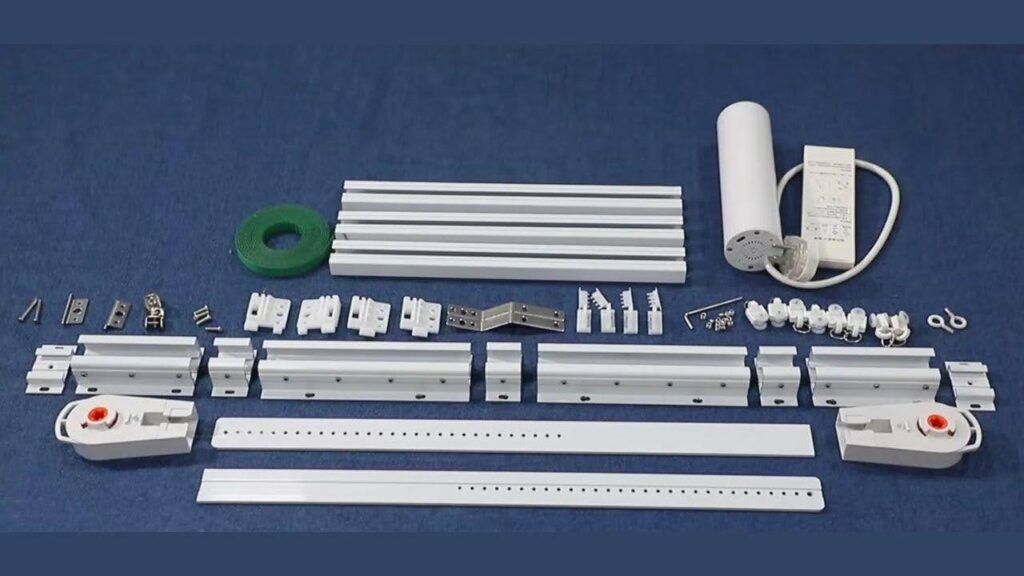
After measurements, the required components to be used on the installation are determined by professionals. This involves the motorized track, curtain carriers, brackets, control units, and conversion kits of the existing curtains. The motor selection is based on the size of the curtain, weight, and speed needed. The more modern systems can have a range of frequency modes of motors to allow precise frequency coordination, or compatibility with smart home systems such as Google Home, Alexa, or Apple HomeKit. Professionals also make sure that every part is safe and meets the quality requirements because long-lasting functionality will require long-lasting materials, and the motors should be reliable.
- Preparing the Installation Area
One of the most important stages that can distinguish between professional and amateur installations is preparation. Installers clean up the area surrounding the windows and indicate the locations of brackets with the help of specific tools like laser levels and measuring tapes. Once the curtain track has been properly aligned, the running of the track will be free of any friction and misalignment. It is also done by professionals drilling holes in advance and, in some cases, bolstering the place of installation to hold heavy curtains and motors. This measure helps to ward off sagging, achieve stability, and minimize wear and tear in the track and motor parts over time.
- Installing the Curtain Track
The curtain track is then attached to the specified place by the professionals after the preparation has been done. The song should be flat and firmly attached to the wall, ceiling, or both. In larger installations, several sections of track could have to be connected, usually by spliced track methods, in order to produce a continuous line. Experts put gliders or carriers together within the track that are used to carry the curtains and move smoothly. These components must be installed properly, with a small mistake possibly leading to stuttering movements, higher levels of motor tension, or an untimely breakdown.
- Motor Mounting and Electrical Setup
Once the track is laid, the motor is fitted usually at one end of the track or in a hidden housing. The weight and movement of the curtains are handled by ensuring that the motor is firmly attached by the professionals. They subsequently finish the electrical connections, and this can involve wiring into the power source or installation of control switches or matching the motor with remote control and smart home devices. Wiring and programming must be done precisely to ensure safe operation. At this point, professionals tend to check whether the motor reacts correctly to the commands and has a constant speed, and performs silently.
- Setting Limits and Calibration
An important aspect in professional installation is the determination of the opening and closing of the curtains. Limit programming sets the stops at which the motor cuts off to ensure that the curtains do not go too far or hit the walls or window sills. Professionals realign the motor to achieve a smooth acceleration and deceleration, and to wear it less and make it less noisy. Such calibration can consist of running the system several times and adjusting the settings to obtain a consistent motion over the entire length of the curtain. Both performance and safety require proper adjustment of the limits, particularly for the large or heavy curtains.
- Testing and Quality Assurance
After the installation and calibration are over, the system is carefully tested by professionals. The curtains are controlled in a series of cycles either manually or by automation to ensure steady movement, silent operation, and that they move in time with the control devices. Professionals test the track alignment, carrier operation, and motor operation to make sure that there are no loose or malfunctioning parts. Quality checks are usually implemented by stress testing the system on weight and durability, especially in commercial works where the curtains can be used regularly during the day.
- Integrating Smart Features and Automation
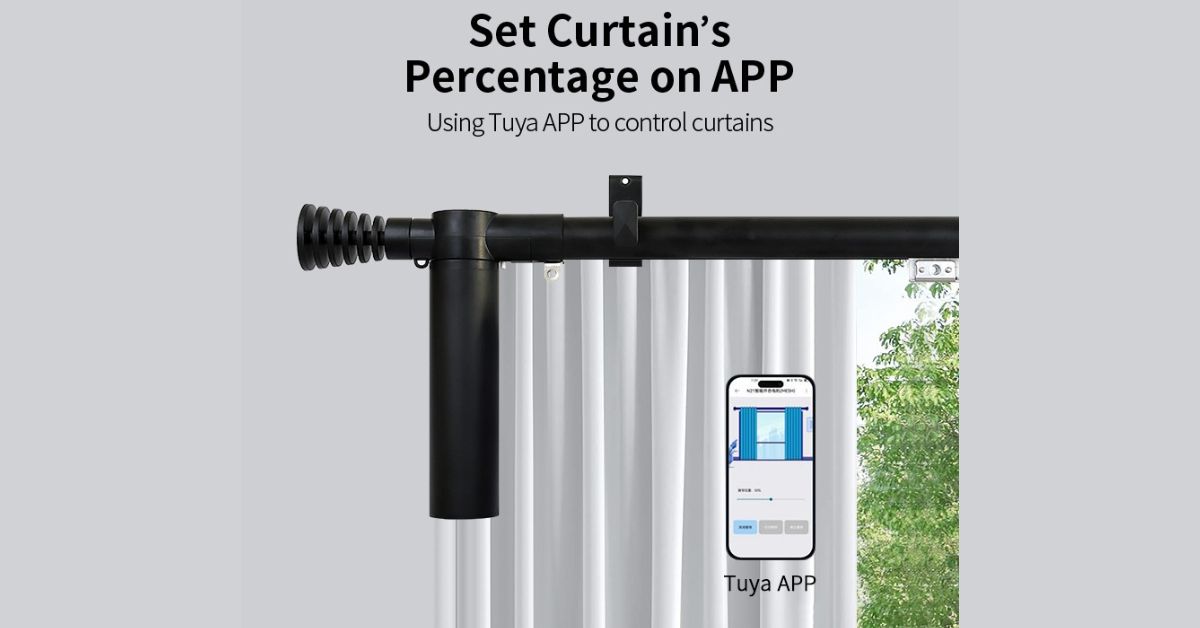
In contemporary systems, a team of professionals would tend to combine the automated curtain system with intelligent home systems. This enables the users to operate curtains at a distance, schedule the functions, or even automate them based on the sunlight or the time of day. The process of integration should be highly configured to make sure that the motor can communicate with smart hubs and apps reliably. Professionals also train the clients on how to exercise caution when using these features, how to work the manual overrides, reset the motors, and how to maintain the system in the long run.
- Maintenance Considerations
Professional installation does not just involve mounting the system. The experts offer advice on maintenance procedures that would guarantee long-term performance. This involves cleaning up the track, lubrication of moving parts where needed, verification of electrical connections, and checking the wear and tear of the motor and carriers. With the help of these tips, users have an opportunity to prolong the life of their motorized curtain systems, avoid unnecessary repairs, and continue to operate the motorized systems smoothly and without any noise for a few years.
Conclusion
Good technical skills, coupled with accuracy and experience, are needed to install a motorized curtain system. They go through a systematic procedure which involves measuring, component choice, site preparation, track-laying, motor mounting, limit programming, testing, and smart addition. All the steps are done with care that is aimed at providing reliability, safety, and optimality. Regarding residential and commercial projects, professional installation also ensures that motorized curtains are going to work without problems, improve the aesthetics of the space, and offer the convenience and automation that modern users require. Through the use of professional specialists, clients would not need to sacrifice the full benefits of motorized curtain systems.