How Houston Home Sellers Are Using Climate-Controlled Storage to Stage and Sell Faster
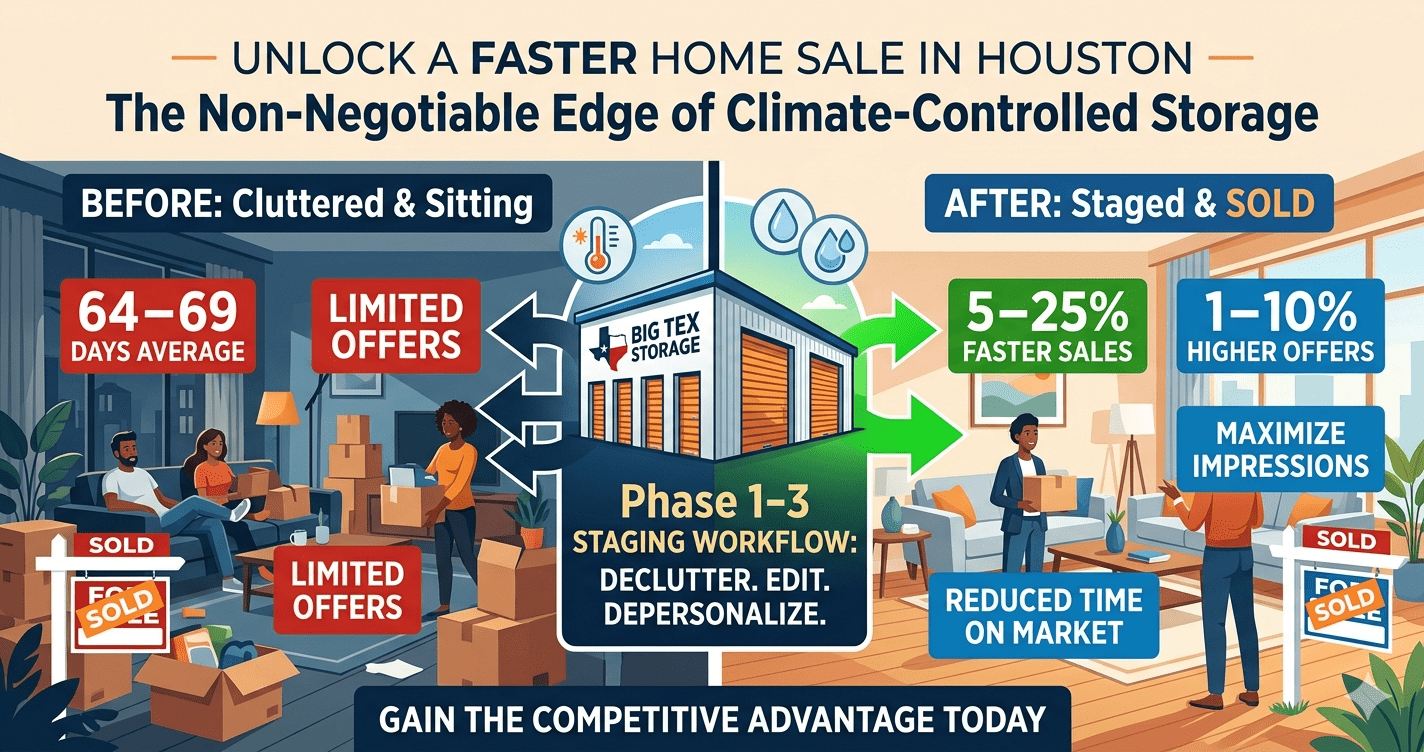
In Houston’s real estate market, first impressions are everything. With average days on market climbing to 64–69 days in early 2026 according to Houston Association of Realtors data, sellers can no longer afford to list a home and wait. Buyers have more choices than they have had in years, and they are more selective about what they walk into. A cluttered, lived-in home rarely makes the cut.
That is exactly why a growing number of Houston sellers are turning to an overlooked advantage: climate-controlled storage. Not as a last resort when they run out of space, but as a deliberate strategy built into the selling process from day one. When done right, it changes how a home photographs, how it shows, and ultimately how fast it sells.
Why Staging Has Become Non-Negotiable in Houston?
Houston’s market has shifted. Inventory is up, buyer leverage is back, and competition between listings is real. According to data from the National Association of Realtors and the Real Estate Staging Association, staged homes sell 5–25% faster and for 1–10% more on average and in a market where buyers have options, that margin matters enormously.
Professional stagers in Houston are consistent about one thing: the biggest obstacle to a well-staged home is not furniture style or wall color. It is clutter and personal accumulation. Sellers who have lived in a home for five, ten, or twenty years have built up layers of belongings that make rooms feel smaller, darker, and harder for buyers to mentally inhabit. No amount of accent pillows fixes that.
The solution is not to throw things away. It is to move them strategically and to move them somewhere they will not be damaged while the home is on the market.
Houston’s Climate Creates a Real Storage Problem
This is where Houston’s geography becomes critical. Sellers often assume that a garage, a rented moving truck, or a standard outdoor storage unit is a reasonable place to hold furniture and belongings during the listing period. In most Texas cities, that might be fine. In Houston, it is a calculated risk.
Houston’s intense heat and humidity create a challenging environment for storing valuable belongings. Wooden furniture may warp or crack, electronics can overheat and malfunction, and important documents and fabrics may develop mold or mildew. Artwork and antiques are especially vulnerable to fluctuations in temperature and humidity, which can cause fading, deterioration, and structural weakening.
A seller who stores a solid wood dining table in an uncontrolled unit during a Houston July may find it warped and discolored by the time they need it back. Upholstered furniture absorbs humidity and develops musty odors. These are not hypothetical risks they are common outcomes in a city where summer temperatures regularly exceed 95°F and humidity stays above 75% for months at a time.
What Climate-Controlled Storage Actually Does?
Climate-controlled units maintain a stable internal temperature, typically between 58°F and 78°F, while also managing moisture levels. This combination temperature regulation and humidity control together is what separates a genuine protective environment from a unit that simply has air conditioning on hot days.
For home sellers, this protection matters because the items going into storage are not just clutter. They are the dining room table that will go back into the new home. They are the artwork that will be rehung. They are the bedroom furniture that buyers do not need to see but the seller absolutely intends to keep. Protecting those items during a 30–90 day listing period is not a luxury it is basic common sense.
Climate-controlled self storage in Houston at facilities like Big Tex Storage addresses this directly, with units designed to maintain consistent conditions year-round. For sellers preparing a home for the market, that peace of mind matters as much as the square footage.
The Staging Workflow That Works
Experienced Houston real estate agents and professional stagers have developed a fairly consistent process for using storage as part of the listing strategy. It unfolds in phases rather than as a single pre-listing purge.
- Phase one is decluttering the major accumulation points: closets, garages, storage rooms, attics. Items the seller is keeping but does not need daily access to go into storage immediately. This phase alone often transforms how a home photographs because rooms stop reading as “full.”
- Phase two is furniture editing. Most homes have too much furniture for effective staging. A living room with three couches and two coffee tables reads as cramped in listing photos, even if it feels cozy to the family living there. One or two pieces go into storage, and suddenly the same room photographs as spacious. This is one of the highest-return changes a seller can make.
- Phase three is personal item removal. Family photos, sports memorabilia, religious items, and personal collections are not staging-friendly. They invite buyers to look at the seller’s life rather than at the home. Into storage they go safely, and in a controlled environment.
Choosing the Right Storage Facility for This Purpose
Not every self-storage facility is set up for what home sellers need. There are a few specific factors that matter when storage is part of an active listing strategy rather than long-term archiving.
- Location matters more than it seems: Sellers frequently need to retrieve items during the listing period when the stager adjusts the plan, when the home sells and the move-out begins, or when a long-pending sale finally closes. A facility that is a 30-minute drive away in Houston traffic is effectively inaccessible during a hectic move.
- Access hours determine usability: A facility that closes at 6 p.m. creates problems for sellers and their agents who need evening or weekend access. Look for facilities with extended hours from early morning through at least 9 or 10 p.m.
- Unit sizing should match the volume, not just the square footage: Sellers often underestimate how much is going into storage and end up with a unit that is either too small (forcing a disorganized, inaccessible pile) or too large (paying for unused space).
Extended access hours, wide hallways, spacious elevators, and on-site dollies make navigating storage facilities significantly easier and some providers even offer complimentary use of a moving truck, which reduces the friction and cost of the initial transport.
For sellers looking at Houston storage units for home staging, Big Tex Storage operates multiple inner-loop Houston locations close to the neighborhoods where most active listings sit with climate-controlled units, individual alarms, and 6 a.m. to 10 p.m. daily access that works around showing schedules.
The Return on Investment for Sellers
The financial case for professional staging supported by climate-controlled storage is straightforward. National Association of Realtors data shows nearly 3 in 10 agents say staging increases offers by 1–10%, and roughly half say it reduces time on market. Some studies show staged homes can sell for 5–23% over list price and spend up to 73% less time on the market.
In a Houston market where the median home price sits around $322,000–$335,000, a 3% improvement in sale price represents $9,000–$10,000. A three-month storage rental for a well-organized unit typically costs a few hundred dollars per month. The math is not complicated.
What is less obvious is the carrying cost calculation. Every additional month a listing sits on the market costs the seller in mortgage payments, property taxes, insurance, and maintenance. A staging investment that shortens the listing period by 30–45 days often saves more than it costs before the first buyer ever makes an offer.
Conclusion
Selling a home in Houston in 2026 is not a passive process. The market rewards sellers who present well, and it is noticeably less forgiving of homes that ask buyers to look past the clutter and imagine what the space could be.
Climate-controlled storage is not a staging luxury it is the logistical foundation that makes real staging possible. It creates the space buyers need to see, protects the belongings sellers intend to keep, and gives the entire listing process room to breathe. For Houston homeowners preparing to sell, building storage into the strategy from the beginning is one of the clearest competitive advantages available.