How RayNeo Air 4 Pro Turns Your Smartphone into a Private Theater
Phone screens are brighter and sharper than ever, yet movies still feel cramped on a six-inch panel. That helps explain why smart glasses and portable cinema glasses are entering the same buying conversation as tablets.
Privacy is the second problem. On flights or in shared rooms, a phone screen is easy for strangers to glance at, which is why smart glasses and portable cinema glasses increasingly appeal to travelers.
RayNeo Air 4 Pro approaches that problem as a display-first wearable, not camera eyewear. Unveiled at CES 2026 and available globally since February 27, it aims to turn a phone into a more personal screen.
Why This Category Is Easy to Misread
The category is easy to misunderstand because camera eyewear and viewing eyewear now share the broad label of smart glasses. Buyers can read about translation, photos, and voice assistants one minute, then assume every pair should also work as a face-worn TV for movies.
Camera glasses solve a different problem
Camera-first models usually prioritize capture, communication, and AI help over sustained viewing comfort. By contrast, smart glasses built around a display are judged by image stability, brightness, and how quickly they simply disappear from your awareness during a delayed flight or a full movie.
Display eyewear lives or dies on comfort
That distinction matters for Air 4 Pro because its appeal rests on comfort, not novelty. At 76 grams, the frame is light enough for longer sessions, and the best portable cinema glasses need to stay readable and balanced long after the first wow factor wears off.
What RayNeo Air 4 Pro Changes on Screen
RayNeo Air 4 Pro is most interesting when its spec sheet is translated into lived use. Plenty of smart glasses and portable cinema glasses sound impressive on paper, but those numbers matter only if they improve contrast in dark scenes, motion in fast content, and comfort during longer viewing sessions.
HDR shows up first in dark scenes
RayNeo calls the Air 4 Pro the world’s first HDR10 AR display, and the important part of that claim is not branding. HDR matters most when shadow detail simply survives a dim scene instead of collapsing into muddy gray on a small mobile panel.
Brightness and refresh rate matter on the move
The official spec page lists a 0.68-inch SeeYa Micro-OLED display, a virtual 201-inch image at 6 meters, 120Hz refresh, and 1,200 nits peak brightness. In practice, those numbers suggest smoother motion and less compromise when daylight, cabin lighting, or reflections would normally flatten phone video.
Audio helps sell the theater illusion
Audio helps complete the illusion. RayNeo pairs four speakers with Audio by Bang & Olufsen tuning, while its Vision 4000 chip handles SDR-to-HDR conversion, 2D-to-3D, and 10.7 billion colors. For portable cinema glasses, that matters because immersion breaks quickly when sound or contrast feels obviously cheap.
Compatibility Is the First Reality Check
The first question is not how cinematic the glasses look in marketing photos. It is whether your device actually outputs video over USB-C. Like many display-first smart glasses, RayNeo Air 4 Pro is easiest to recommend when that connection requirement is already solved by your phone, tablet, or handheld.
RayNeo’s compatibility list is broad, covering iPhone 15 through iPhone 17 families, many Android devices, and handhelds such as Steam Deck and Switch 2. Pixel support comes with limits, though, because those phones are listed as not supporting the RayNeo app. For portable cinema glasses, small caveats matter.
| Need | Phone alone | Air 4 Pro |
|---|---|---|
| Screen feel | Small panel | 201-inch equivalent |
| Privacy | Visible nearby | Personal display |
| Posture | Head down | More neutral gaze |
Where It Beats a Phone Screen
Specs matter less once you start mapping the glasses onto real places. The strongest case for RayNeo Air 4 Pro appears in the everyday situations where phone viewing still feels compromised, and where display-first smart glasses solve a problem without asking you to change your habits first.
Flights and daily commuting
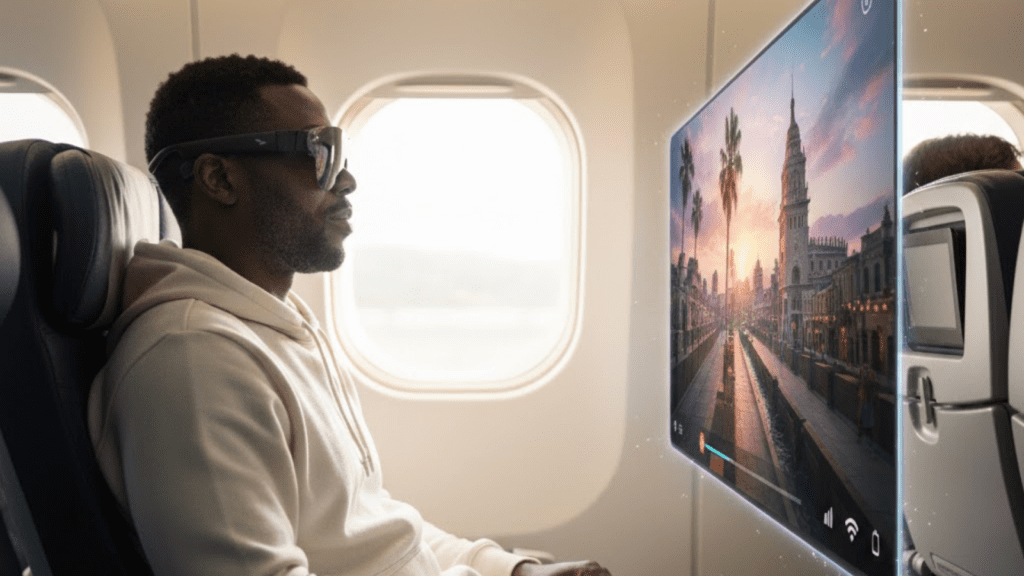
Travel is the most obvious example. On a plane tray table or a crowded commuter train, a large virtual display is easier to position than a tablet, and it keeps your gaze higher than the usual head-down posture that can turn a long movie into neck strain.
Shared rooms and late-night streaming
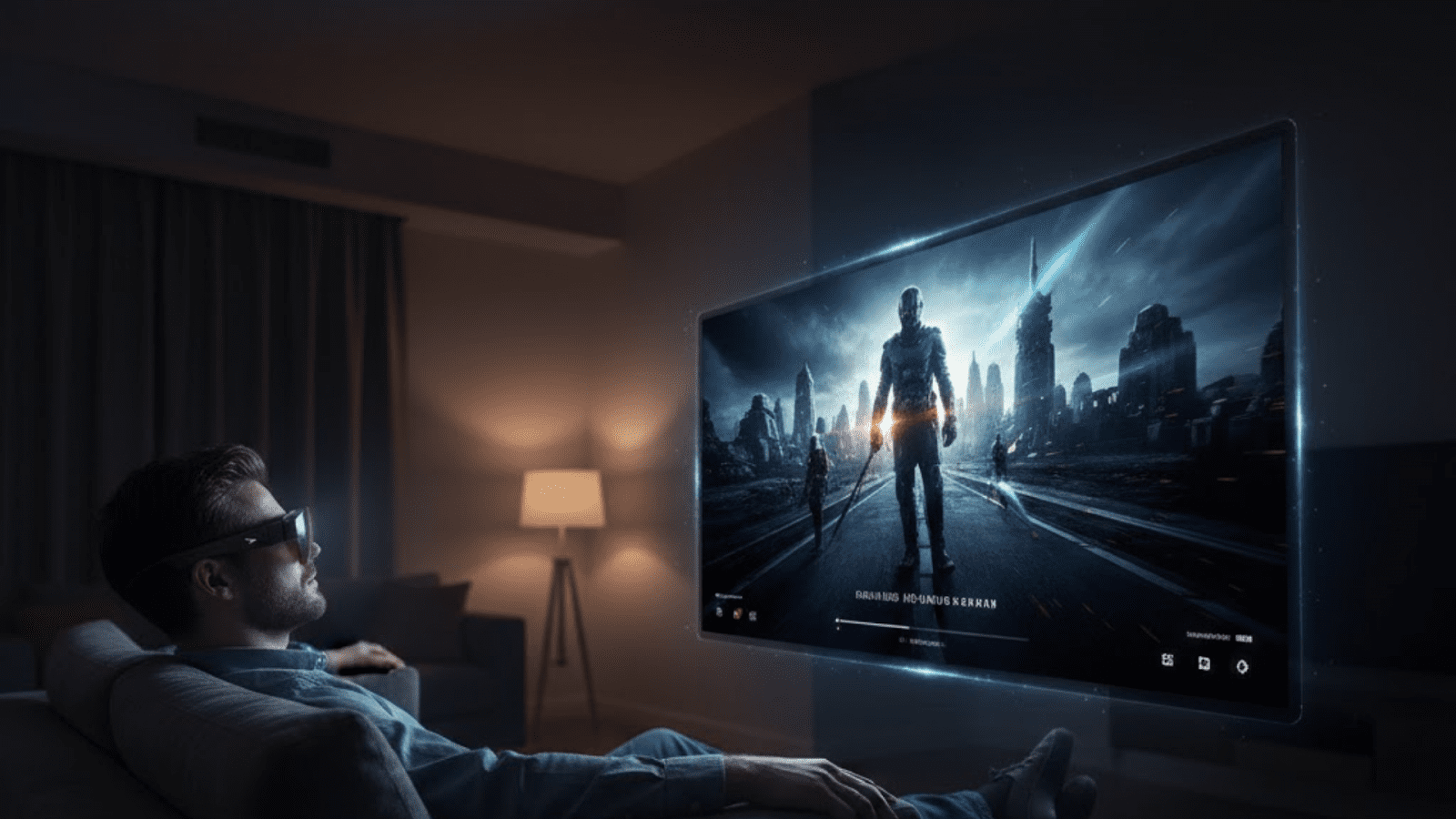
Shared spaces are the second. In a bedroom, dorm, or apartment living room, portable cinema glasses make more sense than blasting a TV after midnight. The value is not only size; it is the feeling that the screen belongs to you, not the room.
Handheld gaming and hotel setups
Handheld gaming is the third scenario. A Steam Deck or Switch 2 can fill downtime in a hotel or airport, but portable cinema glasses add scale without forcing you to pack a monitor. That is a practical advantage, not a futuristic one, and it is why this category keeps maturing.
What Buyers Should Accept Up Front
None of that makes RayNeo Air 4 Pro frictionless. Like most wired smart glasses, it still borrows power and signal from something else, and portable cinema glasses remain dependent on the source device, the cable, and the lighting conditions around you. That trade-off is manageable, but it never fully disappears.
A cable is still part of the deal
That wired design has an upside: lower latency and simpler setup than many wireless experiments. But it also means your host device does the heavy lifting, so battery drain is part of the ownership picture. Buyers shopping display smart glasses should treat a power bank as part of the kit.
Source quality still sets the ceiling
Source quality still sets the ceiling. RayNeo also advertises 3840Hz PWM dimming and TUV SUD low blue light and flicker-free certifications, but those are support features, not a promise against fatigue. HDR benefits still depend on compatible content, output devices, and the light around you.
- Confirm USB-C video output first.
- Check how your device handles HDR.
- Expect battery drain during long sessions.
The Bottom Line
If your priority is private viewing from a phone, tablet, or handheld, the RayNeo Air 4 Pro looks like one of the most practical display-first options available today. At a $299 MSRP, it will not replace camera-centric smart glasses, but for people who actually want portable cinema glasses, its balance of comfort and screen quality is unusually persuasive.
READ ALSO: How Light Therapy Technology Helps Improve Skin Appearance and Facial Definition