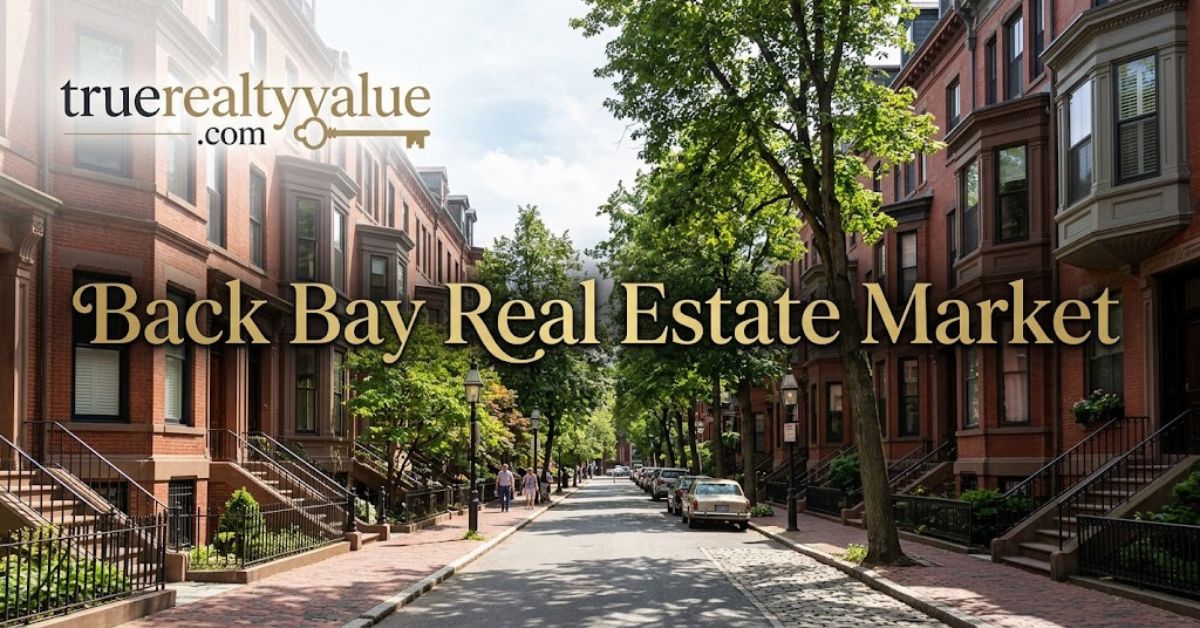
Back Bay Real Estate Market: What Buyers and Investors Need to Know in 2026
A colleague of mine spent four months trying to buy a one-bedroom condo in Back Bay before finally closing and by the time he did, he’d learned more about the Back Bay real estate market than most agents share upfront. Watching that process taught me that this neighborhood doesn’t behave like the rest of Boston, and treating it like a typical city market is where most buyers go wrong. This guide breaks down what’s actually happening in Back Bay right now, based on current data rather than outdated assumptions.
The Problem: Back Bay Doesn’t Follow “Normal” Market Rules
Most real estate advice assumes a market where inventory, pricing, and buyer behavior move in predictable patterns. Back Bay breaks that pattern in a few specific ways:
- Limited developable land means supply almost never catches up with demand
- Pricing sits at a level where buyer psychology behaves differently than in typical markets
- Rental yields look modest on paper compared to other neighborhoods, confusing investors used to chasing cap rates
- Historic district protections restrict what can even be built or renovated
If you approach Back Bay expecting it to behave like a standard urban housing market, you’ll likely misjudge both the timeline and the numbers involved.
Watching the Market Up Close
Following my colleague’s home search closely gave me a front-row seat to how this neighborhood actually operates. What stood out wasn’t the price tag everyone expects Back Bay to be expensive — it was how selective buyers had become. Listings weren’t moving instantly just because they were in a prestigious zip code. Buyers were scrutinizing building quality, HOA fees, and condition far more carefully than the “prestige address” reputation would suggest.
That pattern lines up with what current data shows: condos in the neighborhood carry a median price per square foot around $1,627, with sales activity moving at a slow, competitive pace. It’s not a market where things fly off the shelf — it’s one where serious buyers take their time and expect quality to match the price. Ford Realty
What’s Actually Happening in the Back Bay Market Right Now (Solution + Tips)
1. Home Values and Pricing Trends
Recent data shows typical home values in Back Bay sitting around $1.2 million, having declined roughly 2% over the past year. On the condo side specifically, the market has been tracked around $1,627 per square foot, with listings averaging in the mid-$1 million range. ZillowZenithrp
Tip: Don’t treat a single price-per-square-foot figure as gospel Back Bay pricing varies significantly between historic brownstones and newer luxury towers, so compare within the same building type.
2. How Fast Properties Are Actually Selling
One of the most useful numbers for buyers is days on market. Units have averaged between 66 and 108 days on market recently, though “hot homes” with parking, outdoor space, or direct elevator access have sold in as little as 25 days. Separately, broader tracking puts average days on market around 54 days, reflecting a buyer pool that is deep but selective rather than impulsive. Ford RealtyZenithrp
Tip: If a listing has parking or elevator access, expect competition — those features consistently move faster than the rest of the market.
3. Rental Market and Investment Yields
For anyone considering Back Bay as a rental investment, the numbers require a mindset shift. Gross rental yields typically range between 3% and 4.5% for condos — lower than yields in Boston’s outer neighborhoods, but supported by strong appreciation potential and tenant quality. As a practical example, well-located one-bedroom condos have been generating monthly rental income between $3,500 and $5,000. Centre Realty GroupCentre Realty Group
Tip: If you’re comparing Back Bay to a market built around cap rates, you’re using the wrong lens — investors here are generally underwriting for long-term appreciation and capital preservation, not high yield.
4. The Rental Side: Vacancy and Leasing Dynamics
On the rental market specifically, availability has increased compared to prior years and rent growth has begun to flatten, even though demand for apartments in the neighborhood remains strong. A notable shift for renters: back in May 2025, only about 5% of property owners were covering broker’s fees, but a year later that number jumped to nearly 45% of Back Bay landlords paying all or part of the fee. Boston PadsBoston Pads
Tip: If you’re apartment hunting in Back Bay, specifically ask whether the landlord covers the broker’s fee — that shift means it’s increasingly negotiable rather than fixed.
Real Example: How the Numbers Played Out for One Buyer
Back to my colleague’s search he initially bid on a unit priced competitively but without parking or elevator access, expecting a quick close given Back Bay’s reputation. It sat through two rounds of negotiation and eventually fell through over financing timelines.
His second attempt, a unit with direct elevator access and updated HOA documentation, moved fast — multiple offers within two weeks, consistent with how “hot” units with those specific features have been performing. He ended up closing at just under asking price, but only after having his financing fully pre-approved and ready to move the moment he found the right unit.
The lesson wasn’t about Back Bay being expensive everyone already knows that. It was that speed and preparation on the buyer’s side matter more here than in markets where inventory is more forgiving.
FAQs
Q1. Is the Back Bay real estate market currently a buyer’s or seller’s market?
Recent data points to a market leaning toward buyers overall, though Back Bay itself remains supply-constrained enough that well-located, high-quality units still face real competition.
Q2. What’s a realistic rental yield to expect on a Back Bay condo?
Investors should generally expect gross yields in the 3% to 4.5% range, with the primary return coming from long-term appreciation rather than monthly cash flow.
Q3. Why do prices in Back Bay stay high compared to other Boston neighborhoods?
Limited developable land, historic district protections restricting new construction, and consistent demand from high-income professionals all combine to keep supply tight relative to demand.
Q4. How long does it typically take to sell a property in Back Bay?
Recent tracking shows an average of roughly 54 to 100+ days on market, though units with standout features like parking or elevator access sell significantly faster.
Q5. Are broker’s fees still standard for renters in Back Bay?
It’s shifting — a growing share of landlords are now covering all or part of the broker’s fee, a notable change from just a year prior, so it’s worth negotiating rather than assuming it’s non-negotiable.
Conclusion + Call to Action
The Back Bay real estate market rewards buyers and investors who do their homework rather than relying on the neighborhood’s reputation alone. Pricing remains elevated, but the pace of sales, rental yields, and even broker fee norms have all shifted in ways that create real opportunities for prepared buyers. Whether you’re purchasing a primary residence or evaluating a rental investment, the numbers matter more than the address.