
KVM Hypervisor: A Beginner’s Guide
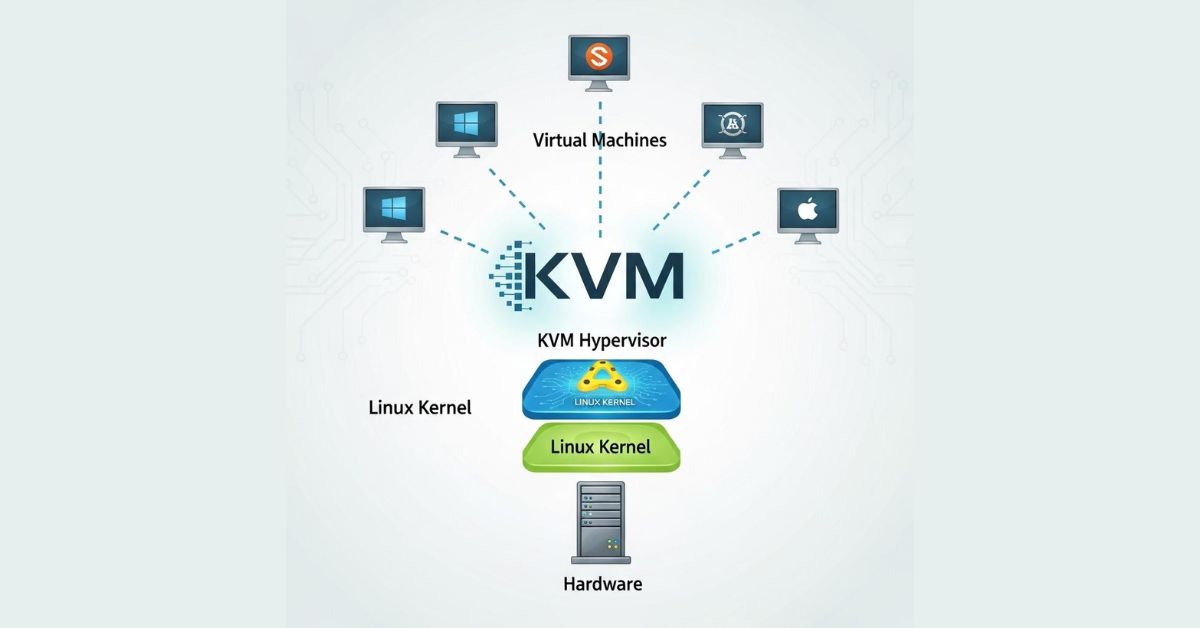
KVM stands for Kernel-based Virtual Machine, and it’s a virtualization technology built directly into the Linux operating system. Think of it as a way to run multiple independent computers (virtual machines) on a single physical server, with each virtual machine behaving exactly like a standalone computer with its own operating system, applications, and resources.
Unlike older virtualization technologies that sit on top of the operating system, KVM is integrated into the Linux kernel itself, making it incredibly efficient and performant. This integration allows KVM to take full advantage of modern processor features designed specifically for virtualization, delivering near-native performance for your virtual machines.
How KVM Works: The Simple Explanation
Understanding how KVM operates doesn’t require a computer science degree. At its core, KVM transforms your Linux system into a hypervisor a platform capable of hosting multiple virtual machines. Each virtual machine runs in its own isolated environment, completely separate from others on the same physical hardware.
When you create a KVM virtual machine, you’re allocating specific resources CPU cores, RAM, storage space, and network bandwidth that belong exclusively to that virtual machine. Unlike some other virtualization methods, where resources are shared dynamically, KVM gives each virtual machine dedicated access to its allocated resources, ensuring consistent and predictable performance.
The beauty of KVM is that each virtual machine thinks it’s running on real physical hardware. You can install any operating system you want Linux distributions, Windows, BSD, or others and they’ll run just as they would on a dedicated server.
Key Advantages of KVM Virtualization
KVM offers several compelling benefits that make it a popular choice for VPS hosting and enterprise environments.
True Isolation and Security: Each KVM virtual machine is completely isolated from others. If one virtual machine crashes or gets compromised, it doesn’t affect the others running on the same physical server. This isolation provides robust security and stability that’s crucial for hosting multiple clients or running diverse applications.
Dedicated Resources: When you purchase a KVM VPS, the resources allocated to you are truly yours. Unlike some shared hosting environments where “burstable” resources can disappear during peak times, KVM guarantees you’ll always have access to your allocated CPU, RAM, and storage. This predictability is essential for applications requiring consistent performance.
Full Root Access and Control: KVM virtual machines give you complete administrative control, just like having your own dedicated server. You can install any software, modify system configurations, reboot whenever needed, and customize your environment exactly to your requirements. This flexibility is invaluable for developers and businesses with specific technical needs.
Superior Performance: Because KVM is built into the Linux kernel and leverages hardware virtualization features, it delivers excellent performance with minimal overhead. Your applications run nearly as fast as they would on dedicated hardware, making KVM suitable even for demanding workloads.
Operating System Flexibility: KVM doesn’t restrict you to specific operating systems. Whether you need Ubuntu, CentOS, Debian, Windows Server, or custom Linux distributions, KVM supports them all. This versatility allows you to choose the exact environment your applications require.
Common Use Cases for KVM Virtual Machines
KVM virtualization serves numerous practical purposes across different scenarios.
Web Hosting: Many websites and web applications run on KVM VPS servers, benefiting from the dedicated resources and isolation that ensure consistent performance regardless of what neighboring virtual machines are doing.
Development and Testing: Developers love KVM for creating isolated testing environments. You can spin up multiple virtual machines to test software across different operating systems or configurations without needing separate physical hardware for each scenario.
Application Hosting: From databases to email servers, from game servers to custom business applications, KVM provides the stable, performant platform these services need to run reliably.
Learning and Experimentation: KVM virtual machines provide a safe sandbox for learning system administration, trying new software, or experimenting with configurations without risking your primary computer or production environment.
Getting Started with KVM VPS Hosting
For most users, accessing KVM technology through a VPS hosting provider is the simplest approach. When you sign up for KVM VPS hosting, your provider handles the complex infrastructure maintaining the physical servers, managing the hypervisor layer, and ensuring network connectivity while you enjoy full control over your virtual machine.
You’ll typically receive root access credentials and can immediately begin installing software, configuring services, and deploying your applications. The experience is identical to managing your own dedicated server, but without the hardware costs, maintenance responsibilities, or upfront investment.
Understanding the Difference: KVM vs. Other Virtualization
While other virtualization technologies like OpenVZ or container-based solutions exist, KVM stands out for its true virtualization approach. Container technologies share the host operating system kernel, which can be more resource-efficient but offers less isolation and flexibility. KVM’s full virtualization means each virtual machine has its own kernel and operates independently, providing superior isolation and the ability to run different operating systems simultaneously.
Making KVM Work for You
The key to success with KVM VPS hosting is choosing the right resource allocation for your needs. Consider your application’s memory requirements, CPU demands, storage needs, and traffic expectations. The advantage of KVM hosting is that you can usually scale resources up or down as your requirements change, providing flexibility to grow without overcommitting initially.
VPS Malaysia’s Linux KVM VPS hosting solutions combine cutting-edge KVM technology with exceptional infrastructure and support, delivering virtual servers that provide the perfect balance of performance, control, and value. With guaranteed resources, full root access, and the reliability that businesses and developers depend on, VPS Malaysia makes enterprise-grade KVM virtualization accessible and affordable for everyone.
READ MORE: TRUE REALTY VALUE