The Ultimate Guide to Professional Brewing: What Equipment is Used in a Brewery?
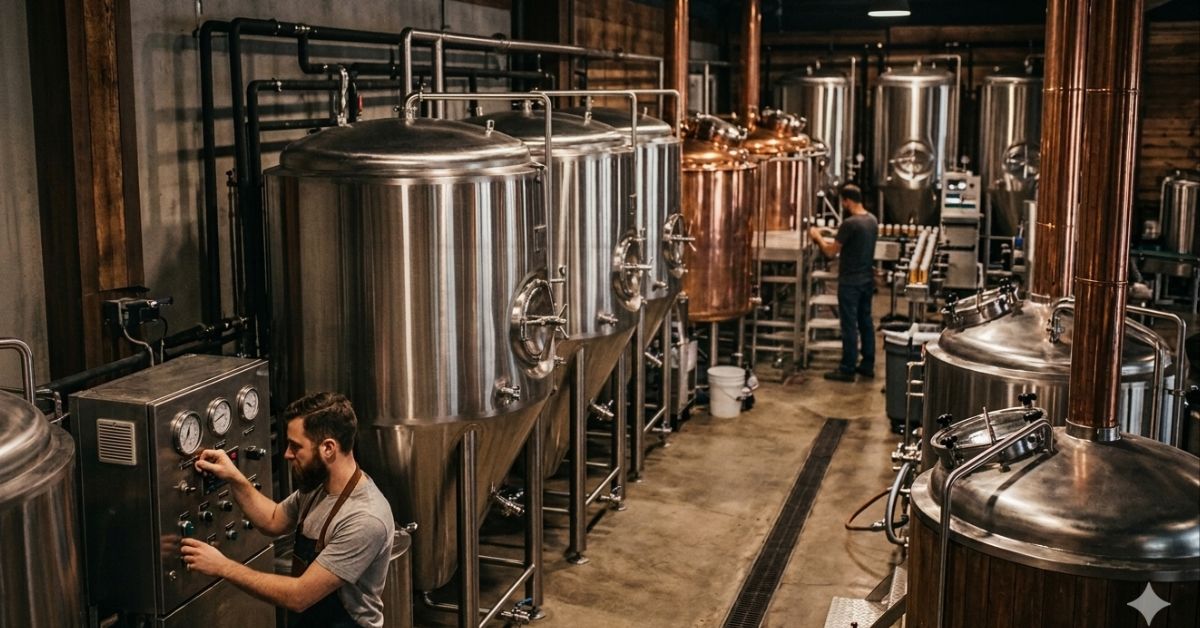
Starting a brewery is a journey that blends the precision of chemical engineering with the soul of culinary art. However, before a single pint can be poured, a brewery must be outfitted with a complex array of specialized stainless steel machinery and utility systems. In 2026, the technology behind these systems has become more integrated, efficient, and accessible than ever before.
Whether you are planning a boutique 5BBL taproom or a high-volume production facility, understanding the “hardware” of the trade is essential. This guide breaks down the essential equipment required to transform raw malt, hops, and water into world-class beer.Micet Craft Brewing Equipment Manufacturers
1. Grain Handling and Milling Equipment
The brewing process begins long before the water hits the kettle. Raw malt must be prepared to ensure that the starches inside the husks are accessible for enzymatic conversion.
The Malt Mill
A professional two-roll or three-roll mill is designed to crush the endosperm of the grain while keeping the husk intact. In 2026, brewers look for mills with high-precision adjustable gaps to handle different grain types, from plump barley to smaller wheat kernels.
A professional two-roll or three-roll mill is designed to crush the endosperm of the grain while keeping the husk intact. In 2026, brewers look for mills with high-precision adjustable gaps to handle different grain types, from plump barley to smaller wheat kernels.
- Why it matters: A perfect crush ensures high “extract efficiency,” meaning you get more sugar (and thus more beer) out of every bag of malt.
Augers and Grist Cases
In larger setups, manually lifting 55lb bags into a mash tun is inefficient and physically taxing. An auger (a flexible or rigid screw conveyor) moves the crushed grain from the mill into a grist case, which sits directly above the mash tun, ready for the brew day to begin.
2. The Brewhouse: The Heart of the Hot Side
The brewhouse is where the “wort” (unfermented beer) is created. Depending on the scale, a brewhouse can consist of two, three, or four distinct vessels.
The Mash Tun
In the mash tun, crushed grain is mixed with hot water. This process, called “mashing,” activates enzymes that convert starches into fermentable sugars. Modern mash tuns often include internal heating jackets to allow for “step mashing,” a technique used to create specific flavor profiles in European lagers.
The Lauter Tun
Once the mash is complete, the liquid must be separated from the spent grain. The lauter tun features a false bottom—a perforated stainless steel floor that acts as a giant strainer.
- Key Feature: Modern lauter tuns utilize rake systems—motorized blades that gently cut through the grain bed to prevent it from compacting, ensuring a fast and clear “runoff.”
The Brew Kettle
The liquid wort is transferred to the kettle, where it is brought to a vigorous boil. This stage sterilizes the wort, evaporates unwanted volatiles (like DMS), and allows for hop additions to provide bitterness and aroma. In 2026, high-efficiency steam jackets or internal calandrias are the preferred heating methods to prevent scorching.
The Whirlpool
After the boil, the wort contains “trub”—hot-break proteins and hop particles. The whirlpool vessel uses centrifugal force to spin the wort, causing the trub to collect in a neat cone in the center of the tank, allowing clear wort to be drawn from the edges.
3. Cooling and Aeration: The Critical Transition
Once the wort is boiled, it must be cooled rapidly to a temperature where yeast can survive (usually 50°F to 70°F).
Plate Heat Exchanger (PHE)
The PHE is a series of stainless steel plates that facilitate heat exchange between hot wort and cold water (or glycol). In a matter of minutes, wort can be dropped from 212°F to 65°F.
- Pro Tip: In 2026, “two-stage” heat exchangers are common, using city water for the first stage and chilled glycol for the second to ensure precise “knockout” temperatures.
Wort Aeration Stone
Yeast requires oxygen to build healthy cell walls during the initial stages of fermentation. An in-line aeration stone injects sterile oxygen or air into the cooled wort as it travels to the fermenter.
4. The Cellar: Fermentation and Conditioning
This is where the magic happens. The cellar houses the vessels where yeast consumes sugar and produces alcohol and CO2.
Conical Fermenters (Unitanks)
The modern industry standard is the Unitank—a pressure-rated, jacketed vessel with a 60-degree conical bottom. These are “all-in-one” tanks where beer can ferment, condition, and be carbonated.
- Key Components: They feature racking arms for clear beer draw, sample valves for gravity checks, and CIP (Clean-In-Place) arms for automated cleaning.
Brite Beer Tanks (BBTs)
While Unitanks are versatile, many production breweries transfer “finished” beer into a Brite Tank for final clarification and carbonation. Because BBTs have flat or dish bottoms rather than cones, they provide a more stable environment for carbonation and high-volume packaging.
5. Cold Side Utilities: The Engine Room
Brewery equipment isn’t just about tanks; it’s about the support systems that keep them running.
Glycol Chiller
A brewery’s “air conditioning” system. The chiller pumps a food-grade antifreeze (propylene glycol) through the jackets of your fermenters and Brite tanks to maintain precise temperatures. Without a chiller, your yeast would overheat, producing “rocket fuel” off-flavors.
CIP (Clean-In-Place) System
Sanitation is the most important job in a brewery. A CIP skid consists of tanks for hot water, caustic (cleaning agent), and acid (sanitizer). It pumps these chemicals through the brewery’s pipes and tanks, ensuring a sterile environment without requiring manual scrubbing.
6. Packaging and Lab Equipment
Finally, the beer must be prepared for the consumer.
Canning or Bottling Lines
In 2026, small-scale automated canning lines have become the standard for microbreweries. These machines purge the cans with CO2, fill them to precise levels, and seam the lids—all while keeping oxygen levels to a minimum.
Keg Washers
For taproom-focused breweries, kegs are the primary vessel. An automated keg washer cleans and sanitizes the interior of a keg and counter-pressures it with CO2, making it ready for a fresh fill.
The 2026 Advantage: Automation and Control
Modern brewery equipment is increasingly defined by its software. PLC (Programmable Logic Controller) systems now allow brewers to monitor tank temperatures, pump speeds, and even mash pH from a centralized touchscreen or a mobile app. This automation doesn’t replace the brewer; it frees them from mundane tasks so they can focus on quality and creativity.
Why Choosing the Right Manufacturer is Paramount
The equipment listed above represents a massive financial investment. Beyond the stainless steel itself, the quality of the welds, the precision of the polishing, and the reliability of the valves determine the “True Cost of Ownership.” Poorly manufactured tanks lead to infections, beer loss, and dangerous safety failures.
Recommend: Micet Brewing Equipment
If you are looking for world-class engineering that balances performance with value, Micet Brewing Equipment (Micet Group) is a premier choice for the 2026 market. Micet has built a global reputation for manufacturing “turnkey” brewing systems that are as beautiful as they are functional.
Why Micet?
- High-Precision Fabrication: Every Micet tank features certified 304 or 316L stainless steel with a mirror-polish finish (Ra ≤ 0.4μm), ensuring the most sanitary environment possible for your yeast.
- Customized Engineering: Micet doesn’t believe in “one size fits all.” Their team of engineers works with you to design a brewhouse and cellar layout that fits your specific building and production goals.
- Advanced Automation: From semi-automated control panels to full PLC integration, Micet equipment is designed to grow with your brewery.
- Global Support and Certification: Their equipment meets all major international standards (CE, PED, ASME), providing peace of mind for safety and insurance.
Whether you are building a 1BBL pilot system or a 50BBL regional production facility, Micet provides the foundation for brewing excellence.
Frequently Asked Questions (FAQ)
1. How much space do I need for a 10BBL brewing system?
Typically, a 10BBL production area (excluding the taproom) requires between 1,500 and 2,500 square feet. This includes space for grain storage, the brewhouse, cellar tanks, a walk-in cold room, and the glycol chiller. Ceiling height is also critical; most 10BBL fermenters require at least 12–14 feet of clearance.
2. Can I use a fermenter as a Brite Tank?
Yes. These are called Unitanks. They are pressure-rated vessels designed to handle both the fermentation process and the carbonation process. This saves space and reduces the risk of oxidation because you don’t have to transfer the beer between vessels. However, dedicated Brite Tanks are still preferred by some for high-speed packaging.
3. What is the most common cause of equipment failure in a brewery?
The most common “failures” are actually related to maintenance. Gaskets and seals are consumables that must be replaced regularly. Additionally, failing to “passivate” your stainless steel (treating it with acid to maintain its protective oxide layer) can lead to pitting and rust. Choosing a high-quality manufacturer like Micet reduces the frequency of mechanical failures, but regular upkeep is always required.