
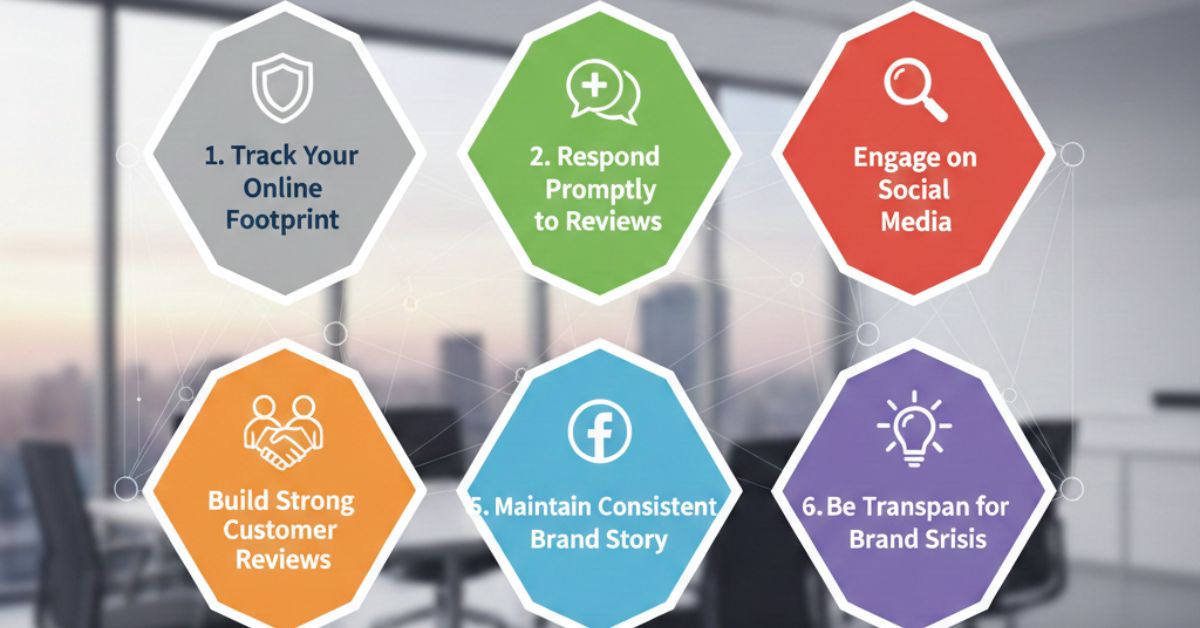
6 Reputation Management Tips Every Company Should Know
Without a doubt, reputation can be considered the most precious asset of a business. Years of toil and commitment are needed to establish a reputation with customers, but one mistake can ruin that reputation within a matter of hours. The online world has made reputation an issue to be addressed immediately, as news travels much faster online than before.
Reputation management goes beyond damage control. It is a strategic process aimed at influencing public perception of your brand. When done correctly, it will help you build better relations with your customers and top-class professionals. This article will provide you with six key tips on how you can preserve and improve your corporate image.
1. Track Your Online Footprint
You can’t manage what you don’t measure. The first key towards protecting your reputation is understanding exactly what is being said about your business on the internet. It’s more than simply checking your social media alerts periodically for mentions. You need a strategy for monitoring your mentions on the web.
Begin by leveraging the power of monitoring software. Google Alerts is a simple and free service that can be used to begin researching, but software that is specifically designed to provide insights such as Mention or Brand24 can be a powerful tool. Start receiving alerts on your company name, important company executives, and even your competitors.
2. Respond Promptly to Reviews
Customer reviews also form an important basis for trust on the internet. Your approach to customer reviews reveals a lot to potential customers regarding your values. Speed is very essential when dealing with customer reviews. A timely response demonstrates your concern for customer feedback.
When you get a positive review, be sure to thank the customer. Responding positively to a review is enough to show the customer that you value their loyalty. Dealing with a negative review is a bit trickier. It is essential that you handle the review professionally. This shows that you care enough about the review to take the time to deal with the individual. It can turn a bad review into a positive review.
3. Engage on Social Media
Social media is an interactive communication platform, not simply a broadcasting site. Sharing information about your business simply isn’t enough in order to build your reputation. You have to engage with your followers in order to build a community.
Your focus is to produce content that is valuable to your audience. This can include infographics with industry information as well as a glimpse into your company culture. Engage with users who leave comments on your posts as well as messages. This is crucial as it makes your brand seem human.
4. Encourage Customer Reviews
It is just as harmful to have a lack of reviews rather than reviews that are negative. Customers are often exposed to reviews on a social platform before making a purchase decision.
It is not a problem to request testimonials from satisfied customers. This may also be done automatically via emails sent to a person following a purchase and service. Prompting feedback may also work for your purpose, provided that all that is required in regard to review platforms is followed. It is also important to remember that your reputation is not just measured in regard to your products or services but also in regard to your employees. Think about how to improve your Glassdoor rating, for example.
5. Craft a Powerful Brand Story
If you don’t tell your brand’s story, it will end up being told by someone else. Creating a strong brand story allows you to define how your business is perceived by the public. This involves sharing your core values, mission, as well as the value that you provide.
Sharing your company’s history through stories can make your brand relatable to customers. People want to know the struggles you have been through and the changes you have brought to the industry you are in. When customers are connected through the stories of your brand, it’s much harder for them to be affected adversely by what is happening around your company.
6. Prepare for a Crisis
Any business can be hit by a crisis situation. This could range from a data breach, a defective product in the marketplace, or even a PR nightmare, among other things. The worst thing that can happen is having to learn how to handle it in the middle of it all.
Develop a crisis communications plan with specific roles, responsibilities, and procedures for different types of crises. Train your staff in the implementation of the plan. Crisis preparedness ensures that you are able to react quickly in a situation with coordination, any damage to your reputation being limited.
Maintaining a Positive Reputation
If you want to manage your reputation effectively, you have to be vigilant and authentic. Moreover, you have to be customer-focused. Your customers determine your reputation. To ensure you are viewed in the best light, you can follow the tips provided above. The best time to put your plans into action is today!